Stile's Secondary School Curriculum
We aspire to make the best science lessons in the known universe.
Here's how we do it.
THE FOUNDATION
What do students need to know and be capable of doing?
What do students need to know in order to be scientifically literate?
Eg. How does antibiotic resistance work and why is it an issue?
How is science relevant to careers other than being a scientist?
E.g. Chocolatiers use chemistry to create new textures and flavours.
How do we teach students the language of science?
E.g. Mathematical thinking: creating models, interpreting, analysing and visualising data.
How science intersects with society, and how it likely will tomorrow?
E.g. Understanding the economic, environmental and social factors slowing the deployment of more renewable energy.
What skills and dispositions are needed to be critical thinkers?
E.g. Evaluating claims using evidence, understanding the statistical significance of that evidence.
We then fill in the rest to ensure we completely cover the standards
E.g. The Australian Curriculum, as well as state and territory curricula.
DEFINING OUR APPROACH
Combine proven best-practices with what actually works in real classrooms
Aligning each state’s standards with local context
We bring Australia’s real-world context into every unit, crafting lessons that feel locally relevant and meaningful, while fulfilling the requirements of both national and state curricula.


Evidence-based pedagogies
We then weave in evidence-based pedagogies, using the ones that best fit the context of the lesson and unit.

High-impact teaching strategies
Finally we make the use of high-impact teaching strategies the path of least resistance.


BRINGING IT TOGETHER
Built by our in-house experts
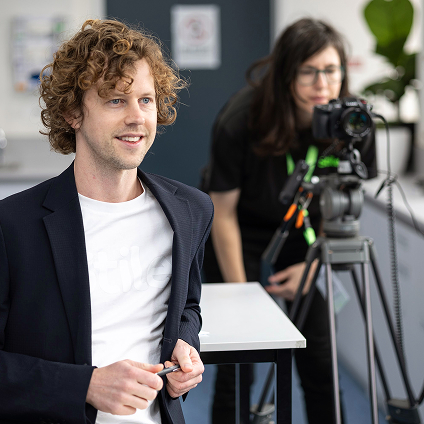
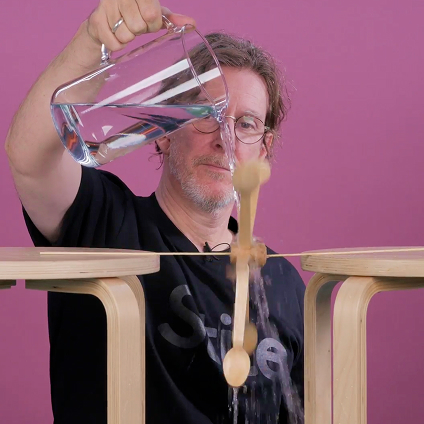
Our talented team of educators, scientists, artists and engineers create Stile's curriculum in collaboration with an entourage of out-of-house practising teachers, pedagogy academics and subject-matter experts.

The secondary school scope and sequence
A sequence of learning packed with phenomena that students actually want to discover for themselves.
Year 7

Mixtures
Can we 3D print new bones to replace broken ones?

States of Matter
Why is liquid water so important for humans to live on Mars?

Food Chains and Food Webs
Why do cats have slit-shaped pupils?
Classification and Biodiversity
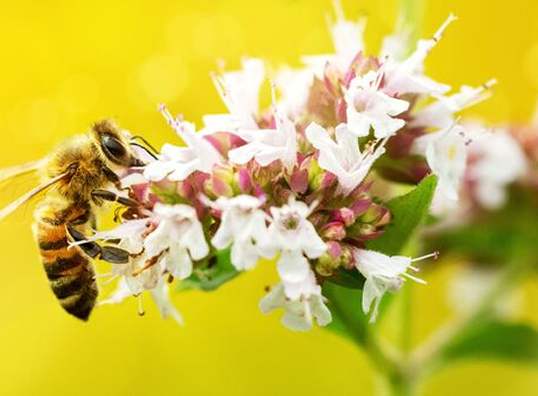
Do we need to save the bees?
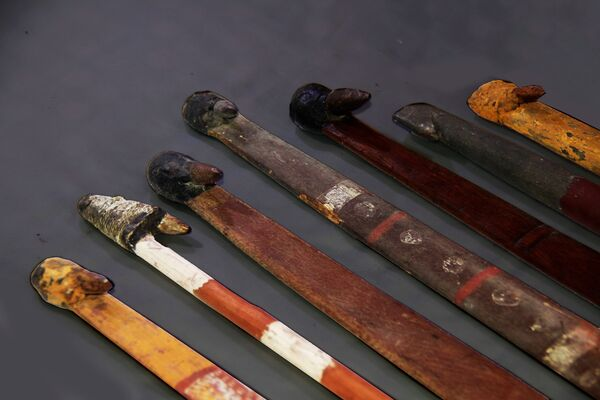
Forces
How have people used forces for thousands of years?
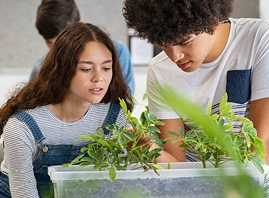
Student Research Project
Teaching students how to complete scientific research

Our Place in Space
Can we travel to the Sun?
Year 8

Cells
Would you eat lab-grown “meat”?

Body Systems
What does it take to be a cold-blooded killer?

The Nervous System
How can your gut influence your mood?
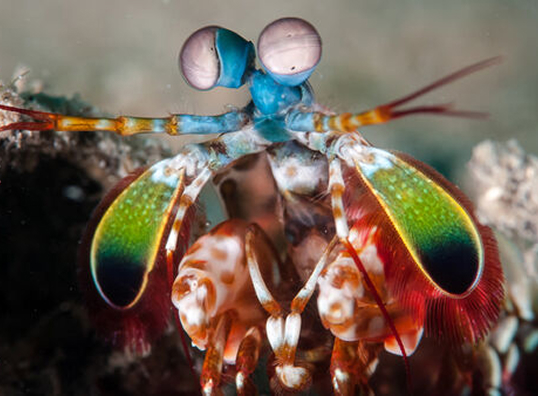
Energy
How can we learn from nature to improve energy technology?

Physical and Chemical Change
What does chemistry have to do with chocolate making?
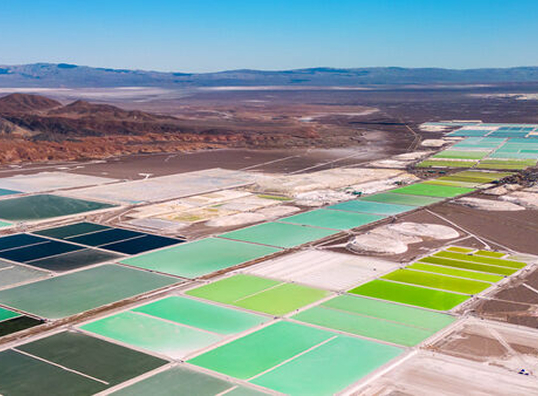
Elements and Compounds
If we need to mine lithium, how do we minimise the impact?

Active Earth
How do we build future-ready cities?
Year 9

Earth Systems
How does our planet recycle?

The Immune System
How can we protect communities from disease?
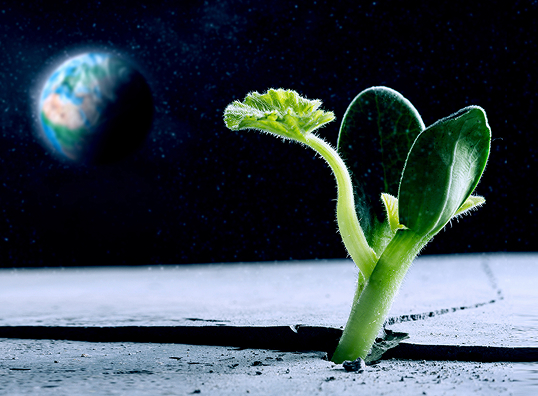
Plants
How can we feed an off-world colony?
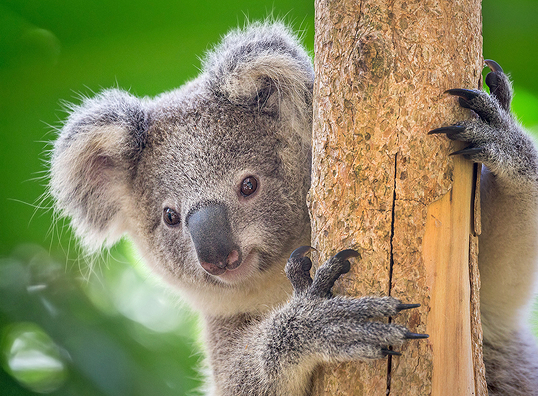
The Survival of Species
A dating guide for animals

Atoms
How can the building blocks of atoms help us see further?

Chemical Reactions
What happens when sodium explodes in water?

Waves
How does someone on the other side of the world hear you?

Energy Conservation – Hydropower
Should we rely on hydropower for our energy needs?
Year 10

Genetics
Can genes increase the risk of cancer?
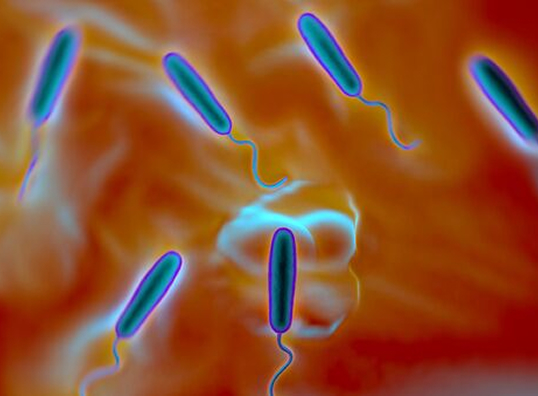
Evolution
Are we responsible for the rise of superbugs?

Kinetics
Are self-driving cars the way of the future?

Newton's Laws of Motion
How can we use Newton's Laws in car crash investigations?

The Periodic Table
How do exploding stars create heavy metals?

Reaction Types
Are self-healing space suits science fiction or just science?

Climate Change
Climate change – how should we respond?

The Universe
How do gravitational waves give us a new way of understanding the universe?
Units built on proven practices
Stile's units are grounded in the 5 E instructional model and scaffold students to "extended abstract" thinking as defined in SOLO taxonomy, where they can generalise their understanding and apply it in a new domain.
Stile's instructional framework was reviewed by Alan J. Reid (PhD) and Steve Ross (PhD) from Johns Hopkins University's Centre for Research and Reform in Education. They determined that Stile's curriculum is grounded in rigorous research and had a meticulously designed logic model.


Engagement strategies that foster collaboration and deeper thinking
Stile lessons include proven techniques designed to actively engage every student in your science classroom.
Learn moreTap to view
Hands-on.
Off-device.
Off-device.
Fish Bowl
A small group discusses a topic while the rest of the class observes.
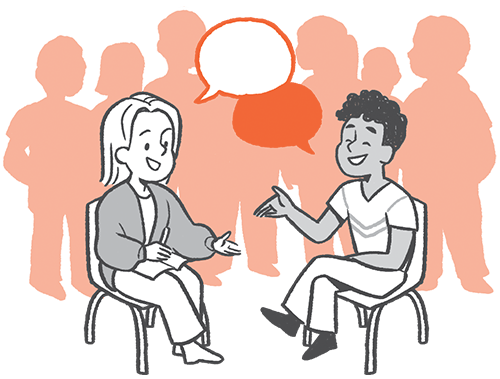
Fish Bowl allows for focused conversation and reflective observation, encourages active listening and note-taking, and helps students learn from their peers' discussion techniques.
WHEN
Discussion: For in-depth discussions and debates.
Modelling: To model discussion techniques and behaviours.
Reflection: When reflecting on complex topics.
HOW
Arrange chairs in an inner and outer circle. Ask the inner group to discuss the topic while the outer group listens and takes notes. Switch roles so everyone has a chance to participate in the discussion. Then debrief and discuss key points and observations with the whole class.
Hands-on.
Off-device.
Off-device.


Back and Forth
Students explain a concept to a partner, who then writes it down.
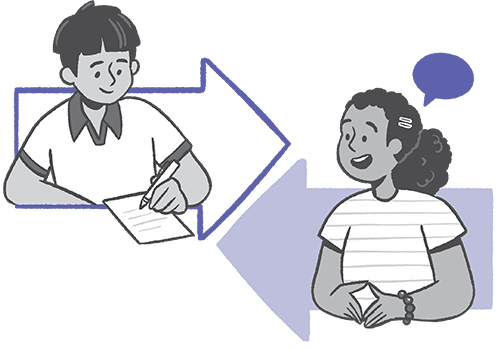
Back and Forth allows students to share their understanding and check each other's explanations for accuracy. This approach helps students correct misunderstandings and solidify their grasp of a topic.
WHEN
Entry task: Review previous content and activate prior knowledge.
New vocabulary: Reinforce understanding and correct usage of new vocabulary.
Review: Recall and solidify understanding of previously covered content.
HOW
Students split into pairs. Partner A explains a problem, process, concept, etc. to Partner B, who writes down the explanation. Partner A checks the explanation for accuracy until both agree. Partners reverse roles and repeat.
Fist to Five
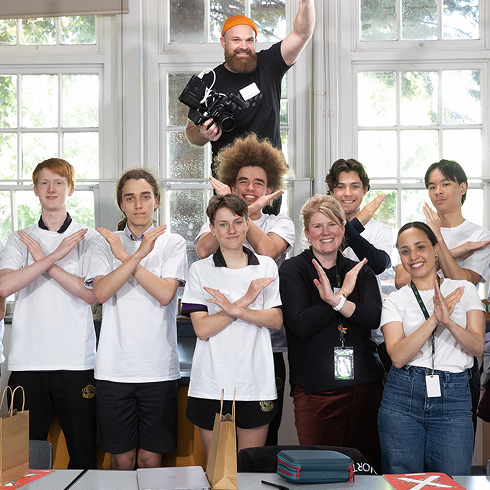
Students show their understanding of a concept using a scale from 0 (fist) to 5 (five fingers).
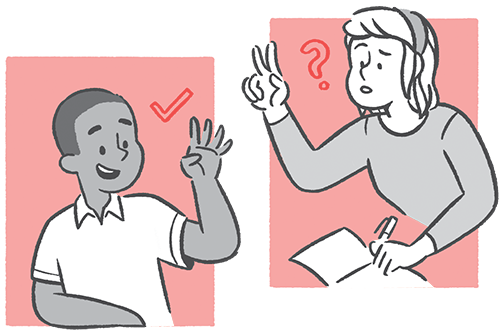
Fist to Five allows for a quick gauge of student understanding. It encourages active participation, and promotes inclusivity by involving all students, creating a dynamic and responsive learning environment.
WHEN
Ice breaker: At the start of a lesson to assess initial understanding.
To close: At the end of a lesson to confirm overall understanding.
Quick feedback: Whenever immediate feedback is needed on any activity or topic.
HOW
Teach the levels of understanding from 0/fist (no understanding) to 5 fingers (complete understanding). Ask students to show their understanding level at key points. Prompt again if needed, and adjust instruction as necessary.
See Stile’s pedagogical model in situ
Download the Teaching Plan for Stile’s Plants unit to see what our unit structure looks like in practice. The Teaching Plan outlines the phenomena, storyline and career profile, as well as the list of lessons, labs and assessments.
Download the Plants unit Teaching Plan


Your core curriculum, ready to go
62
topics
1,144
lessons
73
labs
215
assessments
1,317
videos
10,918
questions
58
career profiles
52
simulations
Explore our core science curriculum